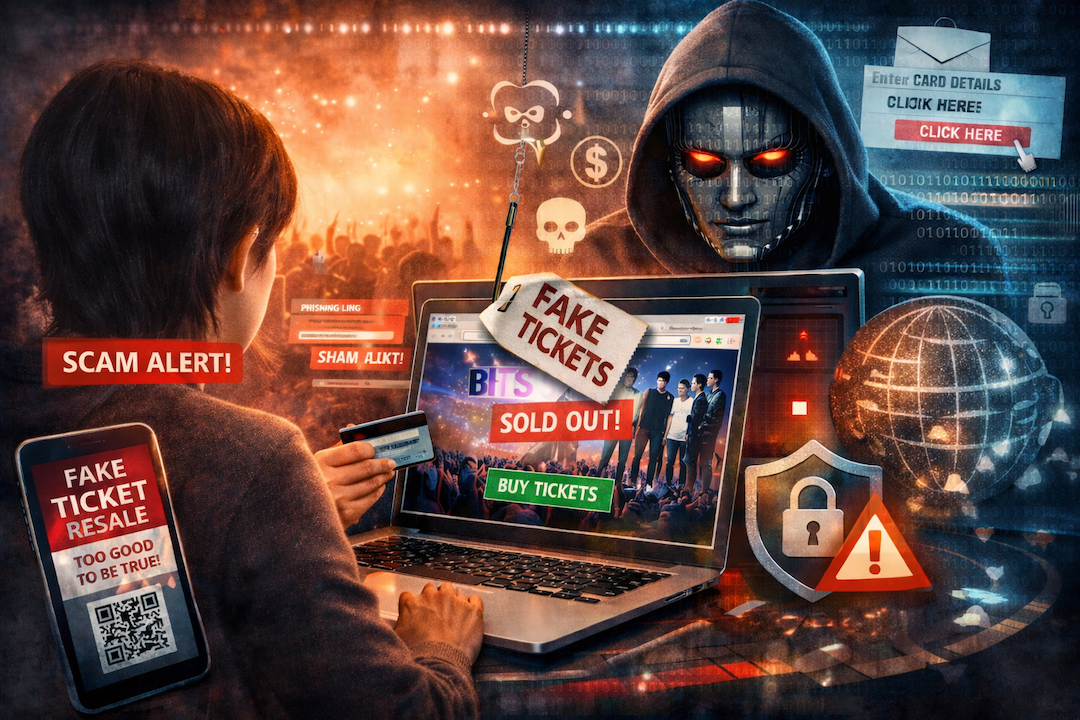
As the Philippines gears up for a blockbuster 2026 entertainment season, Kaspersky is sounding the alarm: your quest for front-row seats could lead you straight into an AI-powered trap. With major concerts and live events driving record-breaking online traffic, cybercriminals are no longer just “scalping”—they are using Generative AI to build near-perfect replicas of ticketing sites like SM Tickets or TicketNet.
Sam Yan, Kaspersky’s Head of Sales for Asia Emerging Countries, notes that these scams are now “harder to detect” because AI removes the classic red flags like poor grammar or janky layouts.2 In the heat of a sold-out ticket drop, a “too-good-to-be-true” resale link on social media can look like a lifesaver, but it’s often a one-way trip for your bank details.
The “Ticket Trap” Checklist: 5 Signs of an AI Scam
| Red Flag | What’s Actually Happening |
| The “Glitch” Discount | Scammers use AI to generate ads claiming a “system error” allows for 50% off tickets. |
| High-Pressure Bots | Fake “live chat” support bots use LLMs to pressure you into paying via non-secure methods (Gcash/Crypto). |
| URL Mimicry | Fake sites use “punycode” or subtle misspellings (e.g., sm-tikkets.ph) that look perfect at a glance. |
| Deepfake “Proof” | Scammers show AI-generated video or audio of “satisfied buyers” or fake official announcements. |
| Instant Expiry | AI-driven timers create a sense of extreme urgency to make you bypass security checks. |
“Cybercriminals are exploiting high-demand events… setting up fake ticketing websites that closely mimic legitimate platforms.4 Cybersecurity must keep pace to preserve consumer trust.” — Sam Yan, Kaspersky
Kaspersky advises a “Zero-Trust” approach when navigating the high-stakes entertainment market:
- Stick to the “Source of Truth”: Only buy from the event’s officially linked partners. Avoid “sponsored” search results that might lead to spoofed sites.
- Audit the URL: Before entering CC info, check if the site has a valid SSL certificate (the padlock icon) and that the spelling is 100% correct.
- Deploy “Kaspersky Next”: For businesses and serious power users, solutions like Kaspersky Next use AI-driven behavior detection to block phishing links before they even load.3
- Enable 2FA Everywhere: Even if a scammer gets your password, Multi-Factor Authentication (MFA) can be the final barrier that saves your account.