The Philippines Has a Generational Happiness Gap — and It’s Widening
Seventy-seven percent of Filipino workers say they’re happy at work. That sounds like a win. But crack open the latest Workplace Happiness Index: Philippines 2025 from Jobstreet by SEEK, and a more complicated picture emerges — one where generational identity is quietly reshaping what \\\”happiness at work\\\” even means.
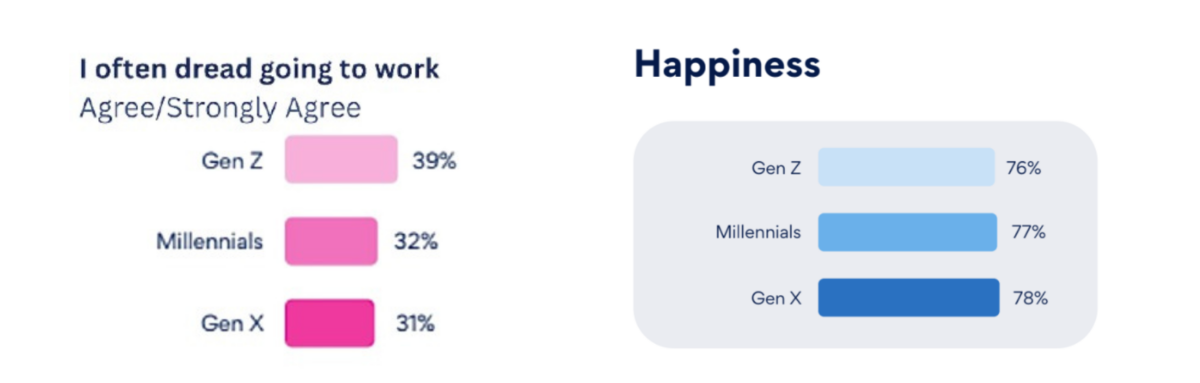
Gen Z workers, the youngest cohort in the Philippine workforce aged 18 to 29, clock in at the lowest workplace happiness score of the three major generations surveyed: just 76%. Millennials edge slightly higher at 77%, while Gen X leads the pack at 78%. The margins are slim, yes — but the underlying emotional realities are anything but.
Gen Z: Purpose-Driven, Flexibility-Hungry, and Quietly Burning Out
Here’s the tension that makes Gen Z’s situation so striking: they’re the generation most fired up about meaningful work, yet they’re also the most likely to dread Monday morning. A staggering 39% of Gen Z respondents said they often dread going to work — nearly 4 in 10 young professionals walking into their offices (or opening their laptops) with a knot in their stomachs.
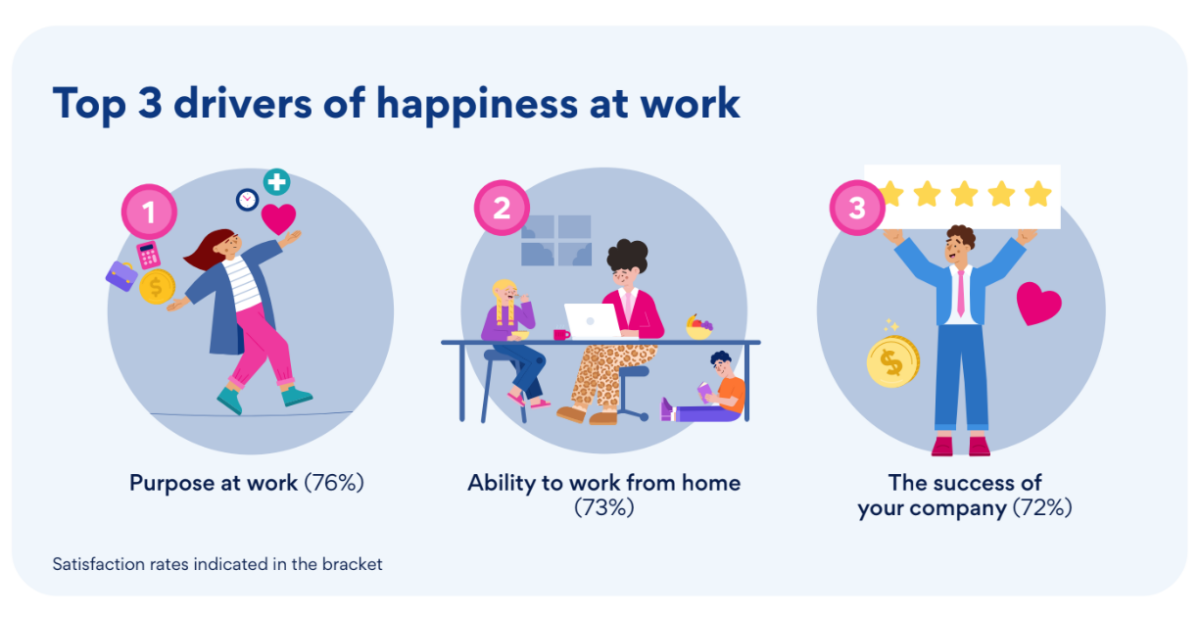
What do they actually want? Purpose tops the list, with 76% of Gen Z workers reporting satisfaction with the meaning they find in their work. Work-from-home flexibility follows closely at 73%, with company success rounding out the top three at 72%. The picture is of a generation that wants their career to align with who they are — their values, their schedule, their way.
But the report reveals a painful irony: despite those pockets of satisfaction, Gen Z workers report higher stress and emotional exhaustion than any other generation in the study. Workload demands and stress levels remain the sharpest pain points, suggesting that the ambition and idealism driving this cohort forward may also be running them ragged.
Millennials: Team Players Who Need Their Tribe
Millennials, spanning ages 30 to 44, tell a different story. For this generation, workplace happiness is deeply relational. It’s built in the spaces between meetings — in team dynamics, cultural alignment, and the quiet comfort of shared values.
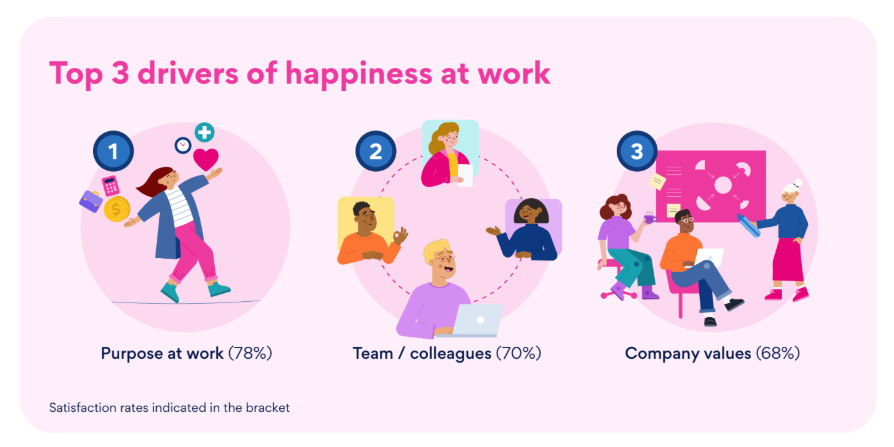
Around 78% of millennials reported satisfaction with their sense of purpose, while 70% expressed positive feelings toward their team and colleagues, and 68% felt good about company values. Career progression and flexibility still matter, but the emotional scaffolding holding it all together is community.
Jobstreet by SEEK notes that this tracks strongly with the Philippines’ collectivist cultural fabric — a society that runs on bayanihan, on togetherness, on the unspoken understanding that work is never just about the individual. Millennials, many of whom are now balancing career demands with growing family responsibilities, are living this truth in real time.
Gen X: The Balanced Ones Who Still Feel the Burn
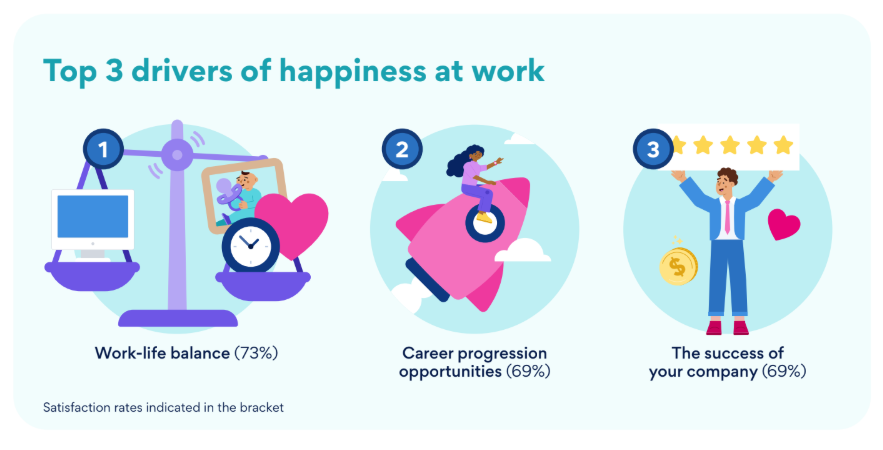
Gen X workers, aged 45 to 59, are arguably the most settled of the three cohorts. They report higher rates of job fulfillment, greater comfort being their authentic selves at work, and a stronger drive to go above and beyond. Their happiness drivers are refreshingly grounded: 73% expressed satisfaction with their work-life balance, while 69% reported positive sentiments toward career progression and company success.
Yet even this generation isn’t immune. Stress and burnout still surface as real concerns, with many Gen X respondents reporting exhaustion and dissatisfaction with how their stress is managed. Experience doesn’t make you bulletproof — it just changes the shape of the battle.
The Big Picture: Happiness Is Not One-Size-Fits-All
Taken together, the findings paint a nuanced portrait of a workforce in motion. Overall, 77% of Filipino workers describe themselves as somewhat or extremely happy at work, placing the Philippines among the happiest workforces in Asia-Pacific. That’s a headline worth celebrating.
But the report’s deeper message is a challenge to employers everywhere: workplace happiness is no longer a monolith. It shifts with life stage, evolves with career priorities, and bends under the weight of mental health expectations that look nothing like they did a decade ago.
\\\”Our findings show that workplace happiness means different things to different generations, but every employee wants to feel that their work has meaning and purpose,\\\” said Dannah Majarocon, Managing Director of Jobstreet by SEEK in the Philippines. \\\”At Jobstreet by SEEK, we believe that there is no one-size-fits-all approach to workplace happiness; that’s why we encourage employers to build workplace strategies that reflect the diverse needs of employees.\\\”
What This Means for the Future of Work in the Philippines
The Workplace Happiness Index: Philippines 2025 surveyed Filipino workers aged 18 to 64 across the country from October to November 2024, spanning diverse job sectors, career demographics, and generational brackets. The goal: give employers not just data, but direction.
For organizations hoping to build cultures that actually work for everyone, the prescription is clear — listen harder, segment smarter, and stop assuming that what makes a 50-year-old veteran feel valued will resonate with a 23-year-old new hire still figuring out who they are. The workforce has never been more generationally complex, and the companies that thrive will be the ones willing to meet each cohort where they actually are.
To explore more insights and find your next great hire or dream role, visit Jobstreet by SEEK.